
Greek Coin
Updated:
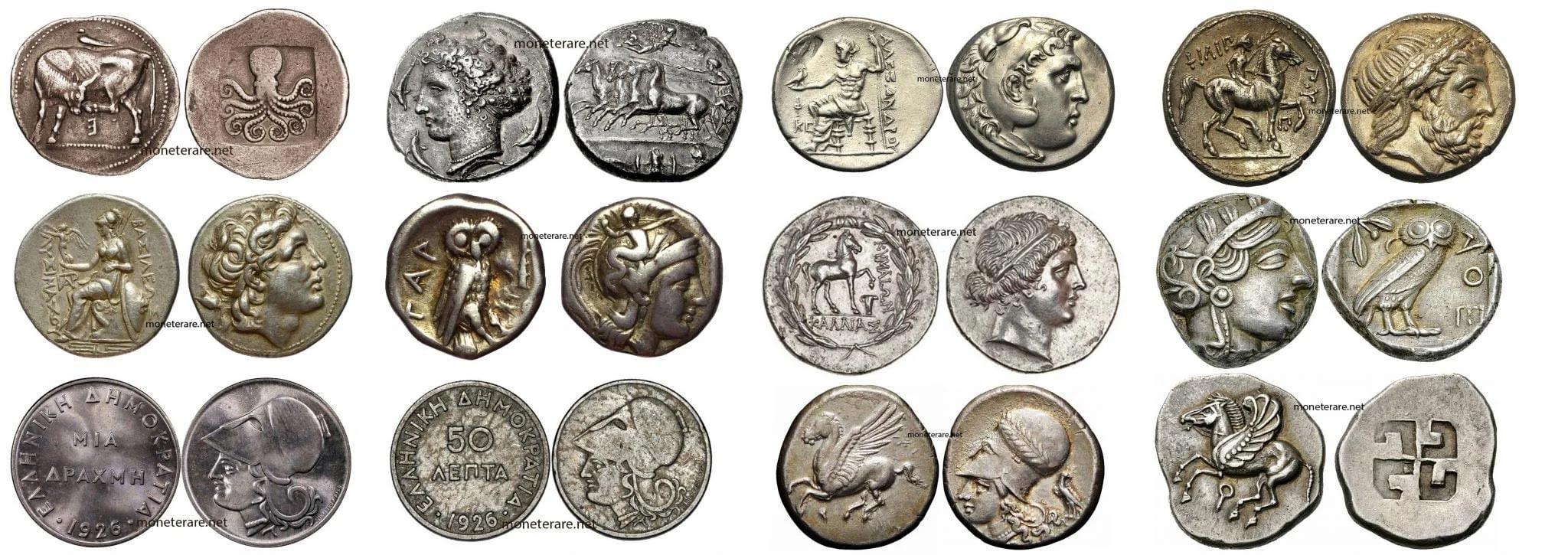
Greek coinage has an ancient history that dates back many centuries.
It can be confidently stated that Greek coins are among the most beautiful and sought after in modern numismatics. Ancient Greek coins indeed feature reliefs, engravings, and production techniques that are truly unique in their kind.
To embark on this journey through the coinage of one of the greatest and most important civilizations of the ancient world, it is essential to divide the various classes of coins into historical periods.
This way, we will have greater clarity of analysis and be able to better understand the concepts addressed in the vast topic of ancient Greek coins.
The specific periods we will analyze are three historical periods defined as archaic, classical, and Hellenistic.
It is useful to specify that these periods present completely different characteristics from each other, even though all the coins share the fact that they were minted using the hammer technique and feature detailed images resulting from the work of renowned and well-known artists.
Archaic Period
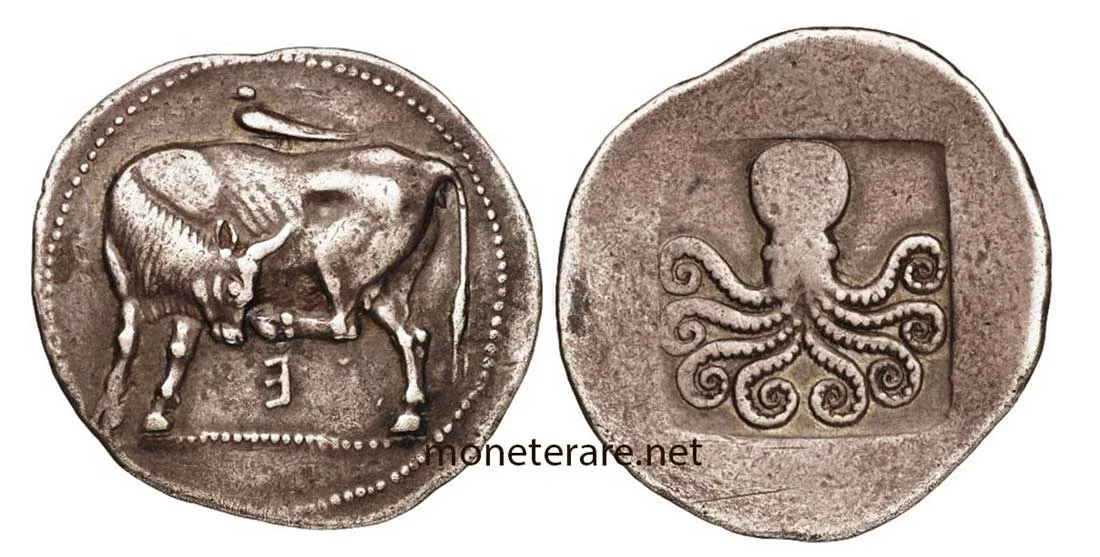
What we might define as the archaic period of Greek coinage begins with the introduction of coins into the economy of Greece.
This historical period starts around 600 BC. During this time, coins were much more crude and less refined compared to the models of later eras. We are indeed talking about small gold or silver coins that bore the name of the city of origin and in some cases the value of the piece.
As the years went by, however, the technique became more and more refined and two main innovations were introduced.
The first was the shape of the coins made in disc form. The second was to represent a deity or a symbolic animal in such a way as to differentiate the various coins from one another. However, it should be noted that at that time in Greece there were many different cities, each with its own coin.
For this reason, it was thought to create coins with the same denomination (value) for all cities, even though each had the possibility to place its own symbol on top. To draw a comparison with the current situation, it is very similar to the system adopted by the European Union with the Euro.
The main medium of exchange was the drachma, to the extent that in 510 BC Athens produced the tetradrachm, which had the value of 4 drachmas and was widespread throughout the Greek world of the time.
Classical Period
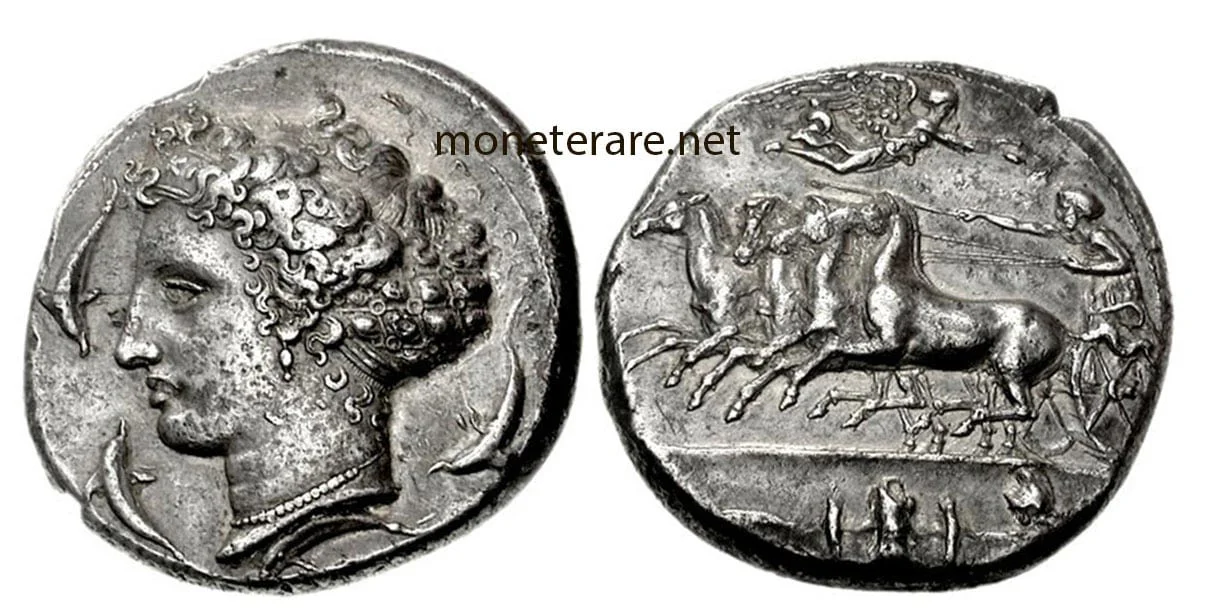
During the classical period, Greek coinage underwent significant stylistic and structural improvements.
Coins that were aesthetically better began to be produced, and the great cities started to utilize gold and silver to create unique pieces.
During this period, the custom emerged that would accompany coins to this day, namely placing a portrait (in this case, a deity or a governor as in modern times) on one side and on the other an identifying symbol along with the value of the coin itself.
New coins also spread, such as the decadrachms, which had the value of ten drachmas, and it was during this time that the custom and tradition of creating commemorative coins began.
Indeed, Athens produced the first commemorative coin following the Greek victory in the Punic Wars. This ancient Greek coin depicted an owl with outstretched wings and an olive branch, a symbol that Athens had won the War but was also a bearer of peace.
Hellenistic Period
Finally, the history of ancient Greek coinage also passes through the Hellenistic period during which Greece began its expansion into much of the known world.
Greek coinage thus began to spread across numerous kingdoms of the time, and for this reason, production increased exponentially. The quantity of coins grew as did their sizes, and in general, the preferred material became gold.
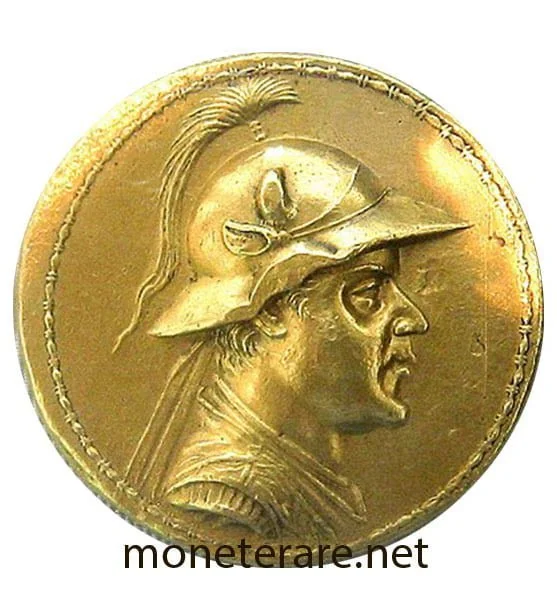
However, it should be noted that despite the greater spread of Greek coinage, the aesthetic quality of the earlier periods was gradually being lost. Exceptions were some rare examples of Greek coins such as the largest gold coin ever made during that period depicting King Eucratides, who reigned from 171 to 145 B.C.
The peculiarity of Greek coins from this period was the use of portraits of living people instead of deities. The characteristics bear a resemblance to modern coins, with the portrait usually in profile and the name of the sovereign on the reverse of the coin.
Modern History of Greek Currency
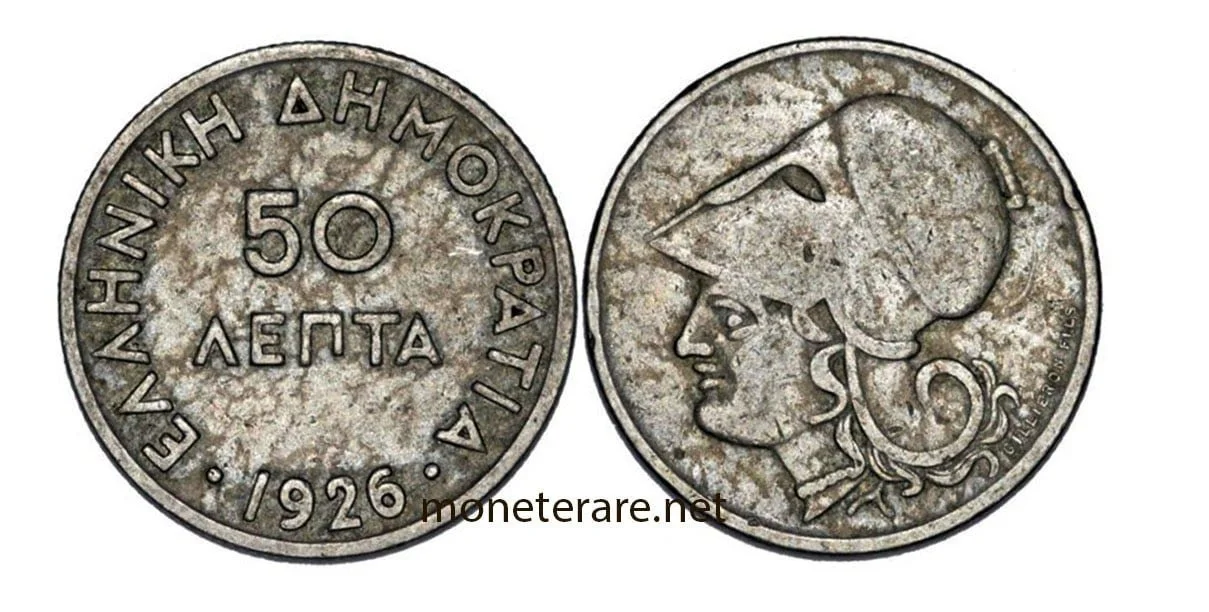
The modern history of Greek currency is inextricably linked to that of ancient Greek currency.
Starting from the name itself (drachma), modern Greek currency in some ways reflects the characteristics of antiquity.
Specifically, the currency was reborn in 1832 after the conquest of independence and the establishment of the modern state of Greece. During this same period, Greece joined the Latin Monetary Union, and in fact, the drachma took on the same value as the French franc and the Italian lira.
However, the value of Greek currency was destined for a disastrous collapse. During the Nazi occupation that occurred between 1941 and 1944, the currency completely lost its value due to continuous looting and hyperinflation.
With the end of the occupation in 1944, a new drachma was introduced to completely replace the old one.
Specifically, the exchange rate was 50,000,000,000:1. On January 1, 2001, Greece officially became part of the European Economic and Monetary Union, fully adopting the Euro. The proposed exchange rate was set at 340.75 drachmas for 1 Euro. About a year later, on March 1, 2002, drachmas were completely withdrawn from the market.
Value and Classes of the Drachma
To fully understand the value of the Greek currency before the transition to the Euro, it is useful to analyze the various coins and banknotes in circulation:
Greek Coins:
- 50 lepta (0.147 eurocent)
- 1 drachma (0.293 eurocent)
- 2 drachmas (0.587 eurocent)
- 5 drachmas (1.47 eurocent)
- 10 drachmas (2.93 eurocent)
- 20 drachmas (5.87 eurocent)
- 50 drachmas (14.67 eurocent)
- 100 drachmas (29.35 eurocent)
- 500 drachmas (1.47 euro)
Greek Banknotes:
- 100 drachmas (29.35 eurocent)
- 200 drachmas (58.69 eurocent)
- 500 drachmas (1.47 euro)
- 1000 drachmas (2.93 euro)
- 2000 drachmas (5.87 euro)
- 5000 drachmas (14.67 euro)
- 10000 drachmas (29.35 euro)
Rare Greek Coins
As we have seen, Greek coins have undergone numerous changes over the years, becoming more defined and distinct. At this point, one might wonder what the rarest Greek coins are and what their current market value might be.
It is important to note that these values refer to the physical sale of such coins, generally purchased by numismatic collectors and enthusiasts of this type of item.
Let’s take a closer look at the rarest ancient coins and their actual value.
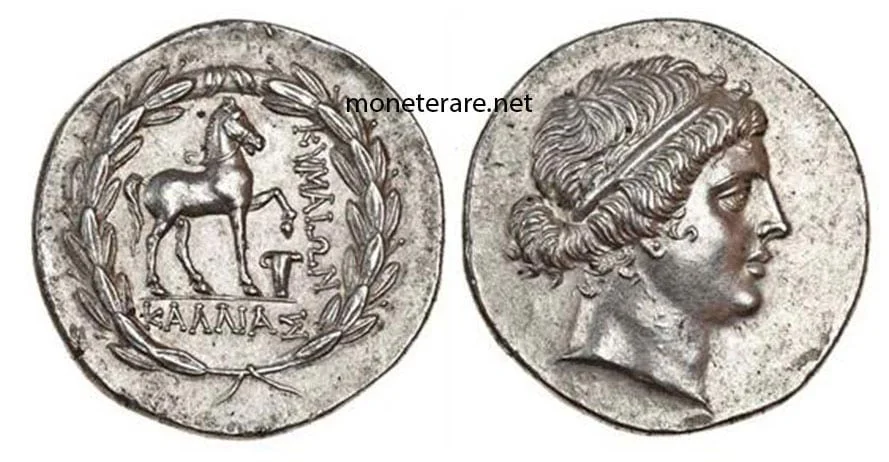
Tetradrachm Aeolis Kyme
Period 190 – 145 B.C.
We start with a highly sought-after ancient Greek coin that can be worth a small fortune. This refers to a piece minted between 190 and 145 B.C. in Aeolis, an area located in Asia Minor, and Kyme, a city situated in the province of Naples famous for its cultural and commercial exchanges.
Specifically, this is a Tetradrachm which features a face on the obverse and engravings with a chariot on the reverse indicating its place of origin. The weight is approximately 14.87 grams and it currently has a value of around €625 in BU (beautiful).
Stater Corinth
Period: 345-307 B.C.
We discuss another truly interesting Greek coin. This time we are talking about a Stater, a coin that was very common in Mainland Greece and somewhat less so in Central Greece. Specifically, the piece in question was minted in Corinth during the period between 345 and 307 B.C.
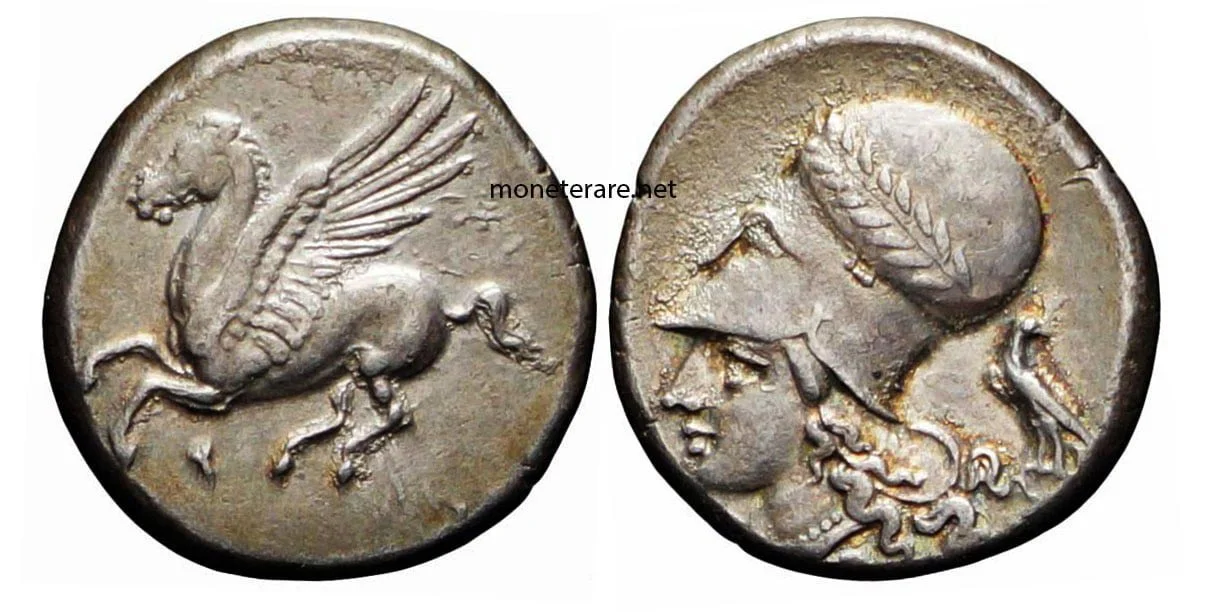
The weight of this coin is 8.5 grams and it has an estimated value of around €530 for pieces in very good condition.
Macedonia Philip II / Tetradrachm
Period: 359-336 B.C.
We talk again about a very common Greek coin: the tetradrachm. As mentioned, this coin in ancient Greece had the value of ten drachmas and was therefore a very popular medium of exchange. Specifically, this piece was minted in Macedonia between 359 and 336 B.C.
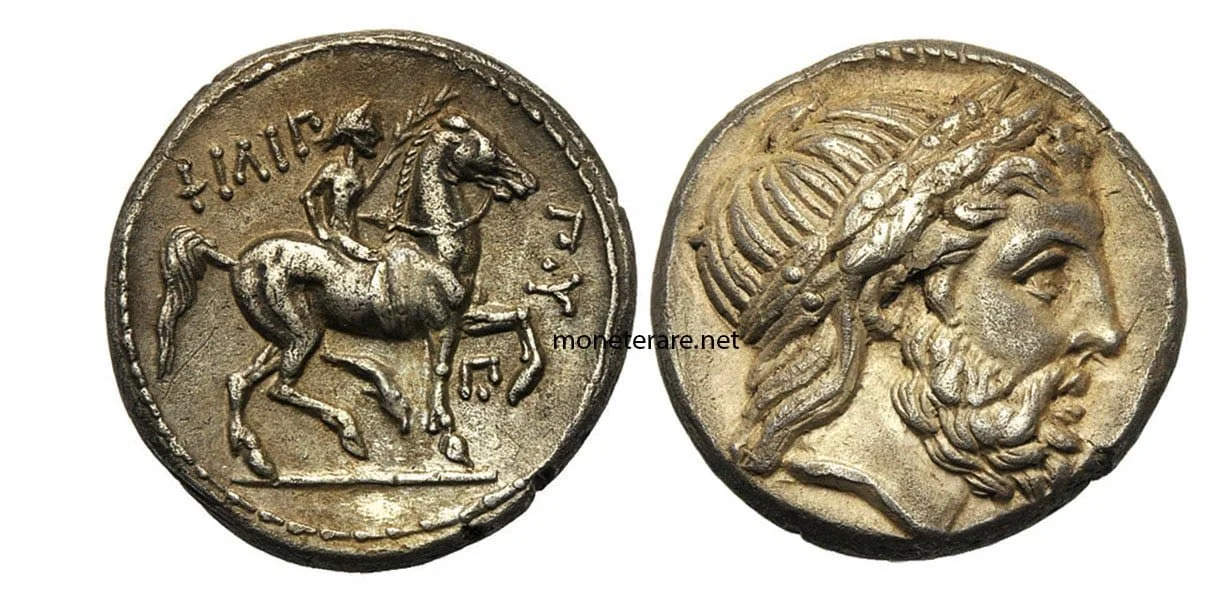
The obverse depicts Philip II in a profile bust wearing a laurel crown. On the reverse of this Greek coin, a man on horseback is represented. This is a silver coin weighing 14.32 grams with an estimated value of €840.
Macedonia Alexander III / Tetradrachm
Period: 336-323 B.C.
Another tetradrachm and once again from Macedonia. However, this specimen differs significantly from the previous one in its own characteristics. This time we are talking about a Greek coin produced between 336 and 323 B.C. depicting Alexander III on the obverse, also shown in profile.
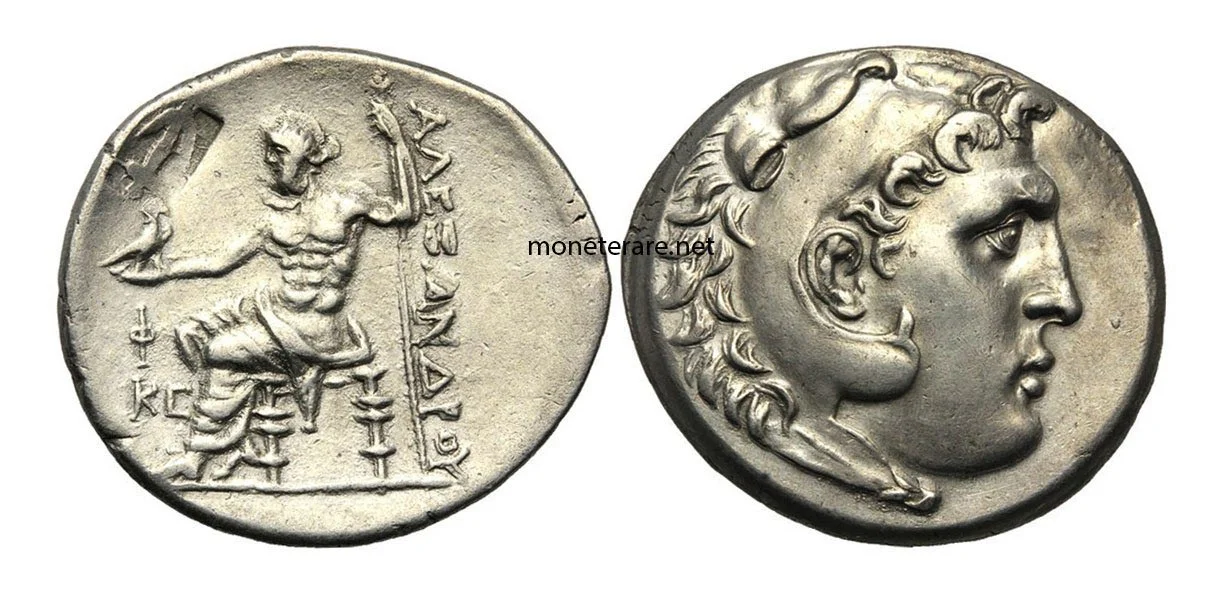
The coin is made of silver and weighs 17.02 grams with a total value of approximately €525 in BU.
Thrace Lysimachus / Rare Tetradrachm
Period: 327-281 B.C.
Now let’s delve into a truly very rare and interesting Greek coin. This is a rare tetradrachm minted in Thrace between 327 and 281 B.C.
The coin has important peculiarities: on the obverse, Lysimachus is depicted. Lysimachus was a Macedonian general and ruler and one of the successors of Alexander the Great. The reverse, on the other hand, depicts the Goddess Athena with an owl.
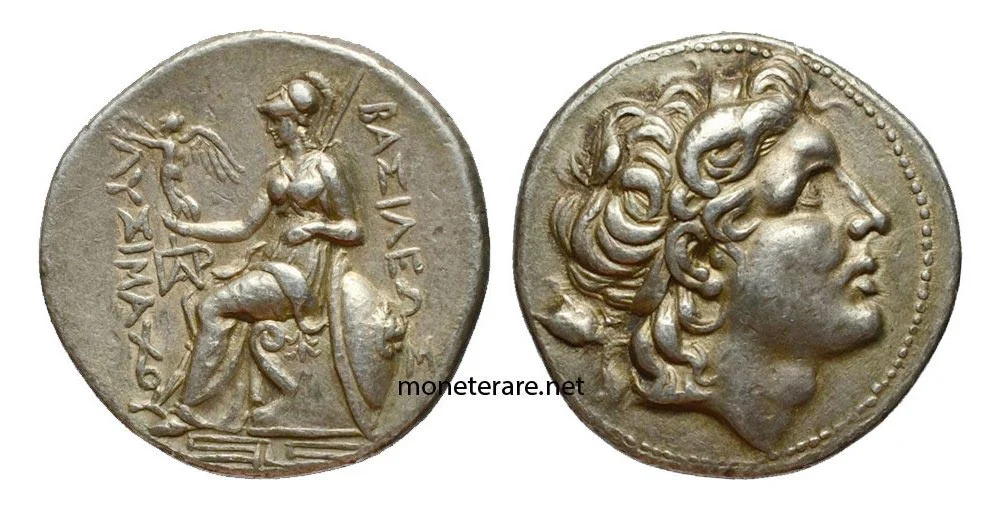
We are talking about a very rare coin made of silver and weighing 16.97 grams. The estimated value for a coin in XF condition is €985.
Calabria Taranto / Drachma
Period: 302-280 B.C.
Finally, we conclude with a drachma, one of the most widespread and common coins in Ancient Greece, as previously mentioned. This specific piece is originating from Taranto in Calabria and was minted during the period between 302 and 280 B.C.
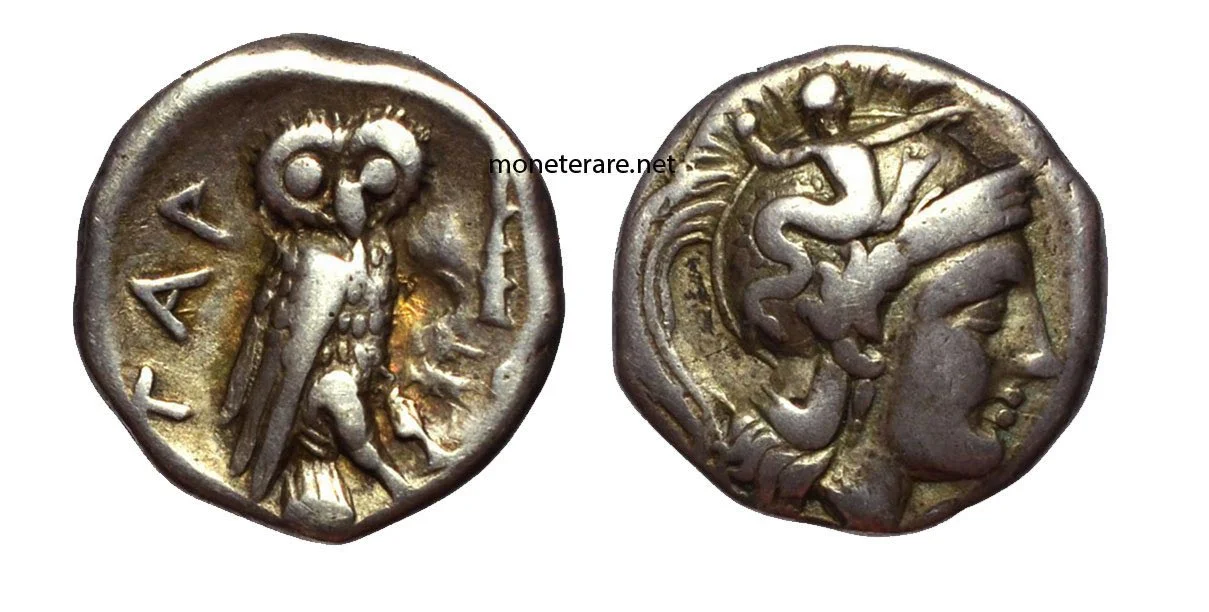
The coin, like the drachmas of the time, depicts the Goddess Athena in profile on the obverse while the reverse features the owl, a very common symbol. The piece is made of silver with a weight of 3.23 grams and an estimated value of €395.
Tetradrachm – Celtic Coin from the Danube Region
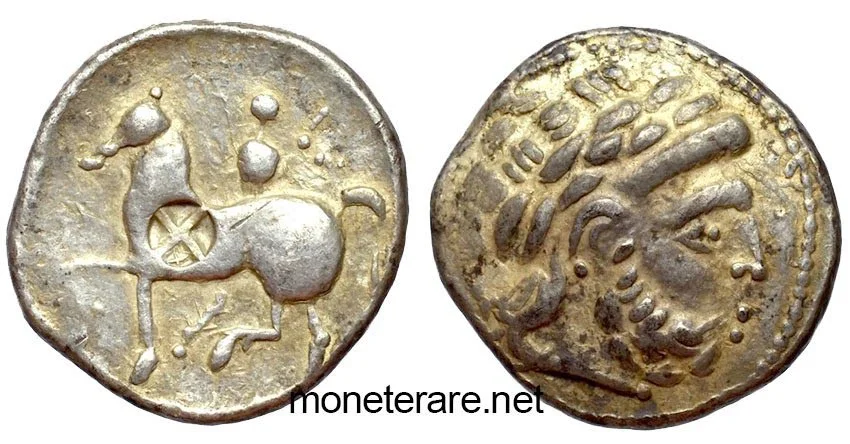
Period: 3rd Century B.C.
Greek coin of Celtic category, originating from the Danube region and dating back to the 3rd Century B.C. This is a tetradrachm weighing 12.39 grams and valued at €245 in BB condition.
Drachma – Baktrian Menander
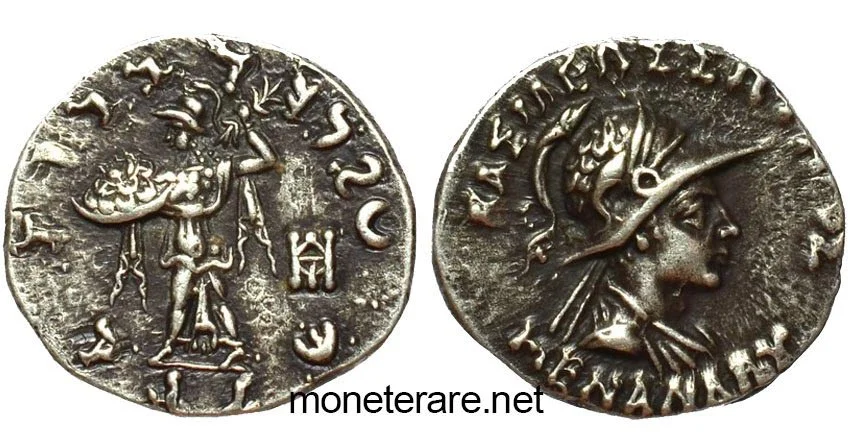
Period: 160-145 BC
This coin comes from the Indian region and dates back to 160-145 BC. It is a drachma weighing 2.45 grams and valued at €90 in qSLP condition.
Didn’t find what you were looking for? Check out these topics:
- If you are looking for Rare Euro Coins then click here.
- If you want info on Ancient Coins and their value, you can find it here.
- Rare Lire and their great value have been discussed here.
- To Sell or Buy Rare Coins online, read these tips.
- All information about 500 silver lire can be found here.
- To see which coins are currently up for auction, click here.
- On this page, we talked about the 2 lire coin.
- If you want info on Chinese coins and their value, you can find it here.
- We discussed the value of the baiocco coin on this page.
- All information about the 50 cent euro coin can be found here.
Where to sell or buy coins
Do you own coins like these, a lot, or a rare piece? Register on Catawiki and place your first bid, or submit a lot for sale — signing up is free. For years we have used this auction site, our partner. Browsing auctions is not enough: start with registration and a first action (a bid or a listing). Register and start.