
Chinese Coin
Updated:
The Chinese currency is defined as Renminbi, which literally means “people's currency” and is the currency currently in use in the People's Republic of China. The official abbreviation is CNY while the commonly used one is RMB.
Introduction to Chinese Currency
The basic unit of Chinese currency is the yuan, which is further divided into 10 jiao. One jiao is subdivided into 10 fen, which are the smallest denomination and are practically equivalent to cents.
The largest denomination is represented by the 100 yuan banknote.
Yuan in colloquial Chinese means “round” or alternatively “round coin”. This indication is a clear example of how the Chinese language has a strong impact on the naming of what is the official currency.
As for symbols, in addition to those already seen, shops often use a Y with two bars on the top. This symbol indicates price even though it is not officially recognized. In fact, according to the Unicode coding system, this symbol would be identified as the Yen, the Japanese currency.
History of Chinese Currency
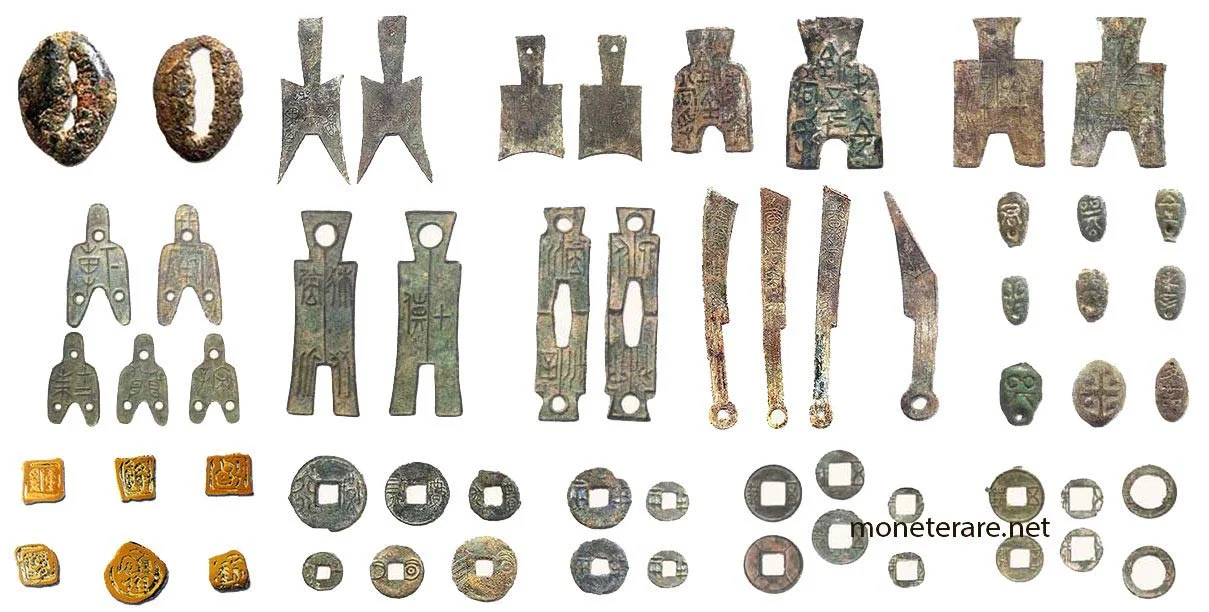
To better understand the characteristics of Chinese currency, one must retrace its history.
As we well know, the Eastern world is capable of hiding charm and mystery around its legends and traditions. In this case, Chinese currency, or whatever you wish to call it, is not exempt from this fascinating past.
Origins of Chinese Currency
Before discussing the Renminbi and the current Chinese currency in general, it is essential to retrace the “path” of the Chinese economy up to the present day.
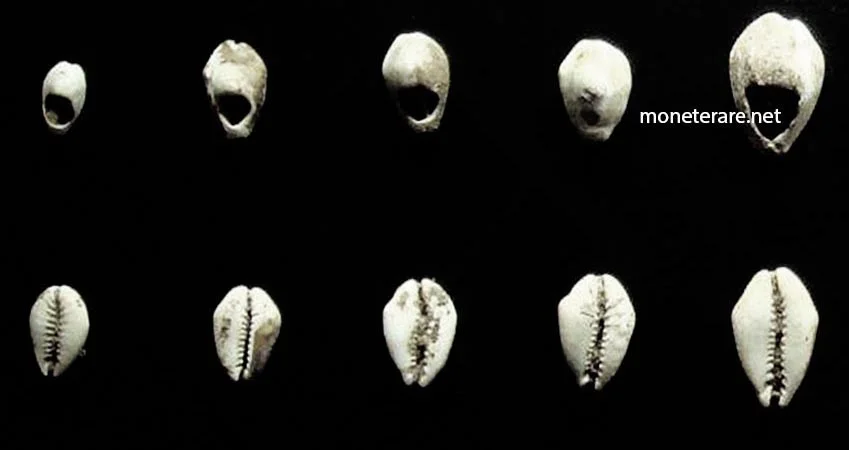
In this regard, it is crucial to know that in ancient times, China did not have any monetary system. Like many other countries, it used barter and shells as means of exchange or payment.
In the first case, as we know well, we are talking about a very simple economic system; goods and items are exchanged for other goods and items in a trade considered equal between the two merchants.
In the second case, shells were used as actual coins and had a purchasing power that, although with enormous limitations, allowed for the procurement of food and various utensils.
Starting from the second half of the 12th century B.C., there was a true introduction of an initial currency in the Chinese Empire.
During that period, metal, particularly bronze, began to be utilized to create small objects that served the role of today’s coins.
These were once again made in the shape of shells and bore no engraving or writing that could identify them. A decidedly primitive form of minting, but one that begins to mark the path towards future civilization.
The First Chinese Coins
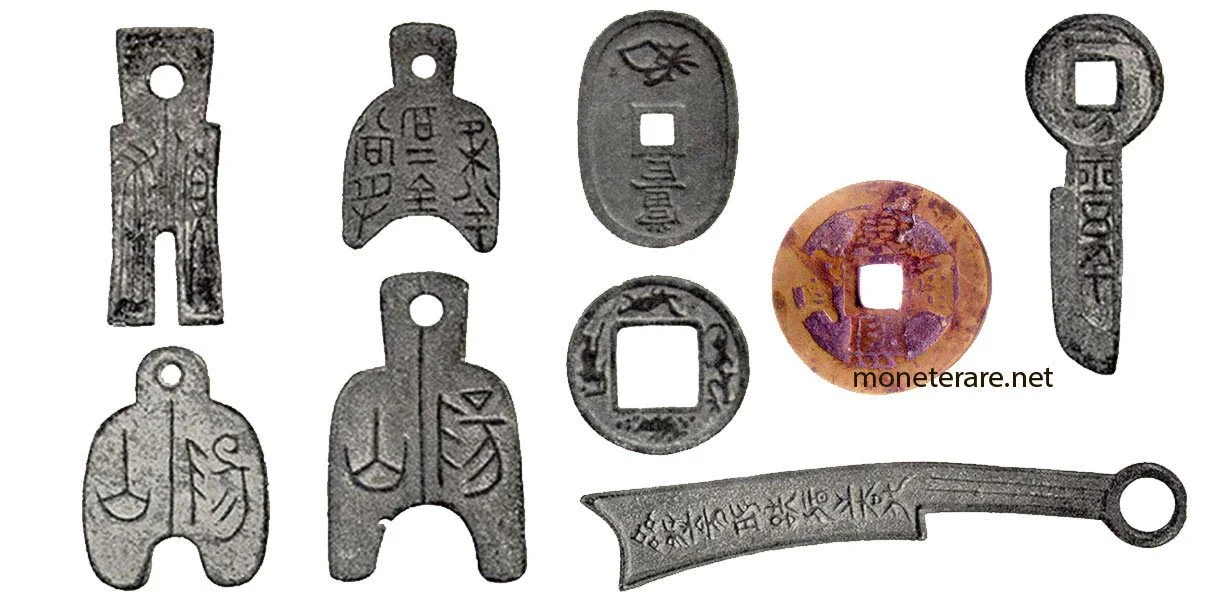
We can officially speak of the first Chinese coins only from the end of the 12th century BC. It was during this period that, under the Zhou dynasty, the first ancestral forms of Chinese currency began to spread.
In particular, these abandoned the shell shape and began to be represented as objects and tools of widespread use. It was not uncommon during that time to pay with coins shaped like shovels, spades, or knives, on which the first engravings also began to appear.
They were also defined as “spade money” or “knife money” due to their shapes.
In addition to symbols of heaven and earth, information such as weight and authority also began to be glimpsed.
These types of Chinese coins saw their maximum development during the period between 770 and 476 BC in the so-called “Warring States Period.” Instead, between 771 and 250 BC, a coin shaped like a “chan spade,” an ancient agricultural tool, was produced, which gave the coin a certain popularity.
In subsequent periods, many variants of coins were produced, which presented the most different shapes.
From the 4th to the 3rd century BC, for example, coins were made in the shape of archways, which remarkably resembled those of Korean style.
From the 3rd century onwards, human-shaped coins were created, which varied in size and elongated or shrunk shapes based on their region of origin.
Unification of China and the First Round Coins
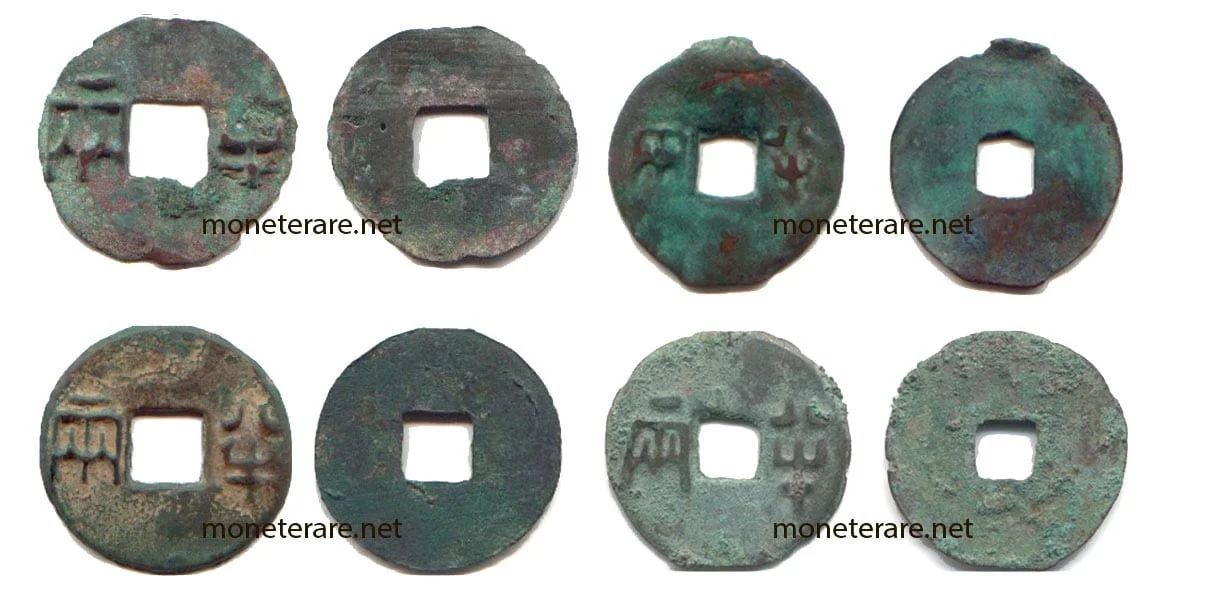
This decidedly confusing period from an economic and monetary perspective was followed by a time characterized by a long process of unification.
In particular, under the rule of Emperor Qin Shi Huangdi in 221 B.C., there was a cultural unification of the entire Empire, which began to become a single economic power and more.
During this period, Chinese coins known as “ban liang” also began to circulate. They were made of bronze and had a round shape on the outside with a hollow square inside. This was likely designed to save metal.
Other legends suggest that the two symbols (circle and square) represented heaven and earth, two elements irreparably united and hoped for at the same time. Furthermore, the inner hole allowed for easier transport of the coins by threading a linen or cotton string through them to tie them together.
This shape for coins was maintained until the end of the Qin dynasty in 1911 A.D., thus for more than 2000 years.
Development of Chinese Currency
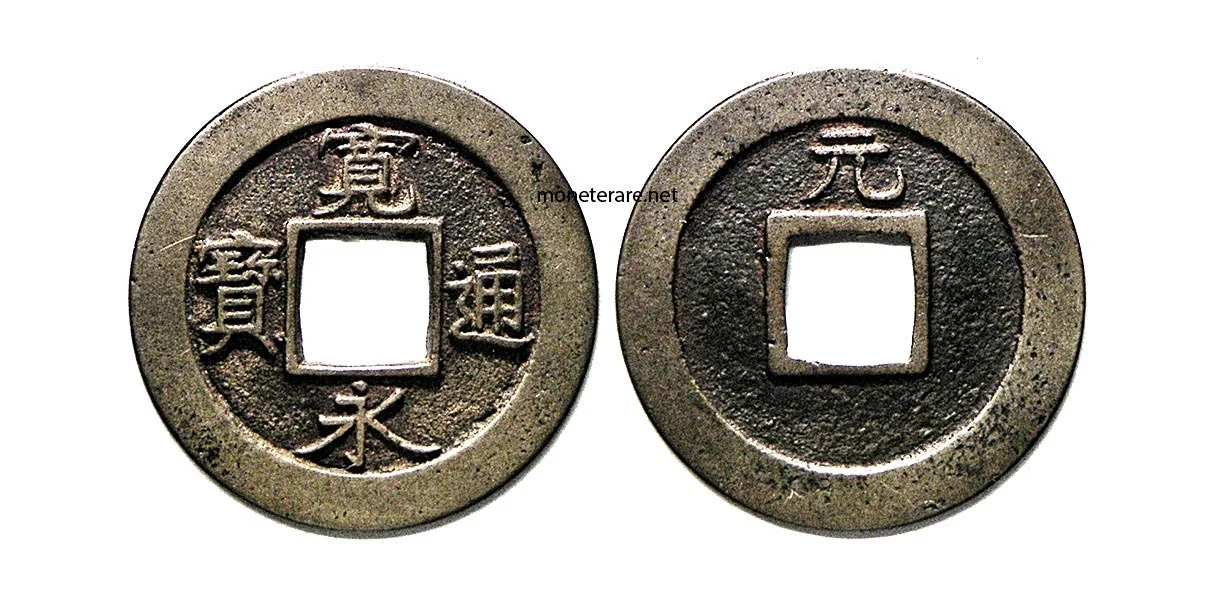
During the Song and Tang dynasties from 618 to 1279 AD, coins began to feature inscriptions and engravings.
Specifically, in most cases, these are inscriptions by famous poets or artists and usually contain phrases of peace or philosophy. Each coin can have two or even four different inscriptions depending on its denomination.
It is no coincidence that this historical period is considered a time of great development for currency, the economy, and generally for all aspects of Chinese social life.
From the 10th to the 12th century, China, particularly the northern part, was occupied by nomadic and barbarian tribes. It was these tribes, along with the Mongols, who occupied China a century later, that began to issue different currencies.

It is estimated that from the mid-19th century, around 5000 different issues were produced, with coins that, as can be easily understood, were practically of all types.
What should be emphasized about Chinese currency, however, is that, unlike other countries, it has remained unchanged over the course of many centuries.
The principle that has guided the creation of these currencies has always been that the coin should respect the tradition. It was indeed necessary for it to always present signs that could be traced back to religion and beliefs.
Modern History of Chinese Currency
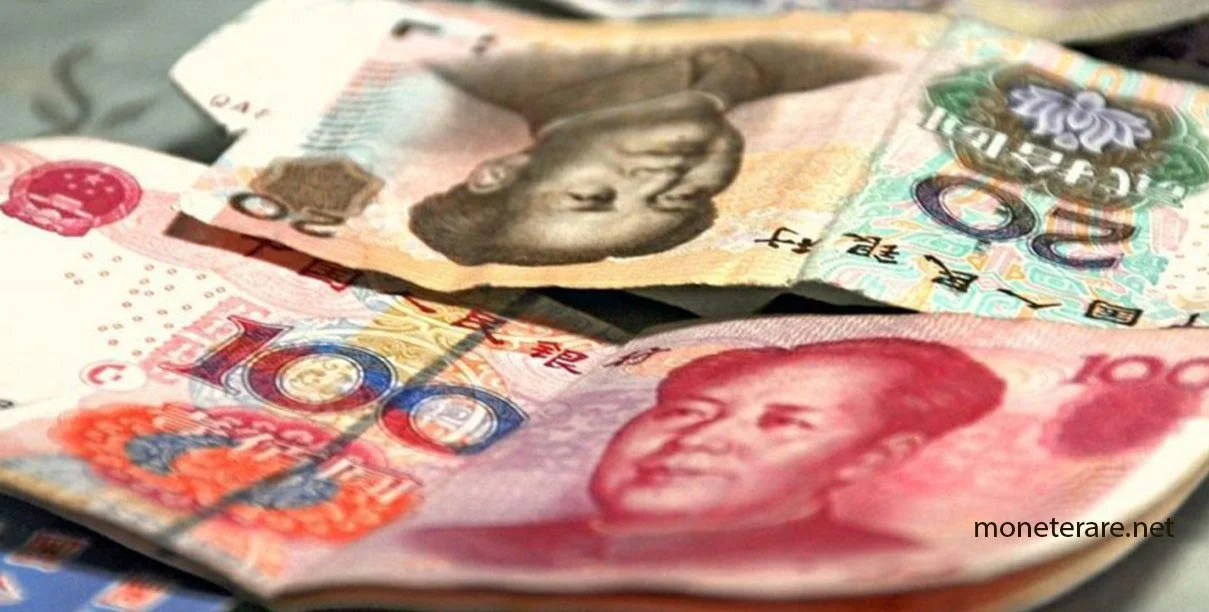
After this journey through the centuries, we can arrive at the present day to fully understand the path of today's Chinese currency.
The renminbi was introduced in China for the first time in 1949, just before the victory of the communist forces. At the same time, strict rules and regulations were established regarding exchanges and the value of the currency itself. We can say that, with rare exceptions, the value of the currency has remained at the rate of 2.56 renminbi per US dollar almost all the time.
A breath of change occurred only towards the end of the 1970s and the beginning of the 1980s.
During this period, Chinese society and culture experienced a sudden opening towards the Western world, which began to be seen with completely different eyes.
The renminbi indeed became much easier to convert, and the laws became less strict and more oriented towards openness to other cultures.
Between 1997 and 2005, the exchange rate of the renminbi against the US Dollar continued to change, reaching 6.38 per USD. In simple terms, one RMB was worth about 13 cents. However, over time and years, internationalization and globalization favored an increasing openness to foreign markets.
For this reason, in 2013 it was officially confirmed that the Chinese renminbi is the second most traded currency after the dollar, surpassing the Euro and the European Union by a large margin.
Moreover, the Chinese currency is also one of the most used for international exchanges. In fact, according to statistics from 2014, China accounts for the country “responsible” for 12.4% of international trade worldwide.
Collecting and History
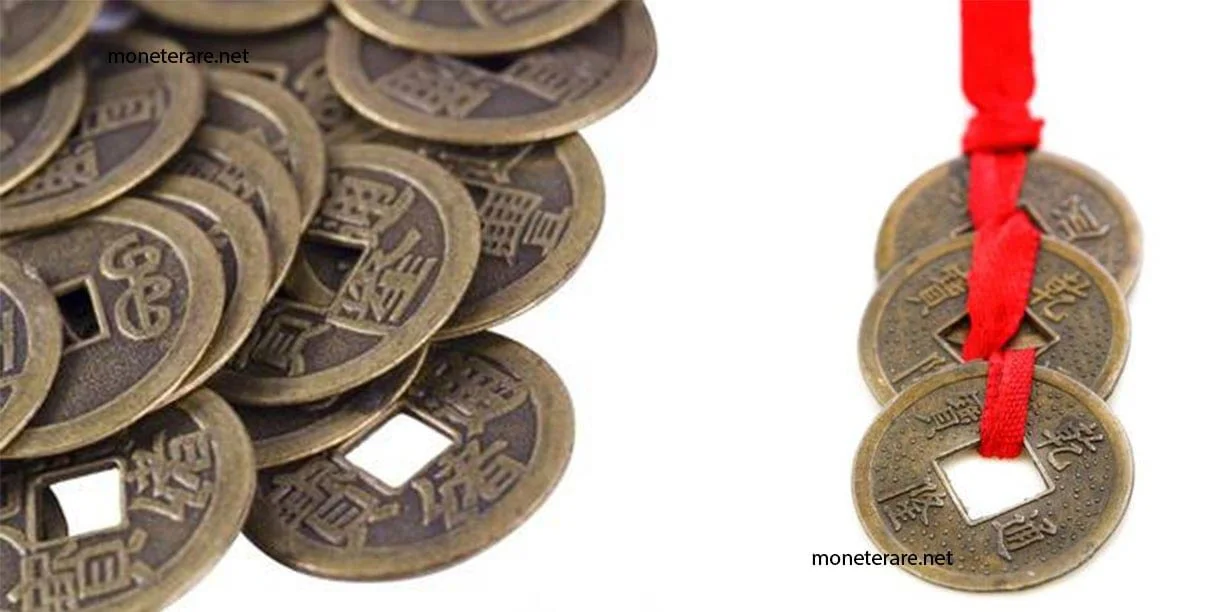
As we have seen, the history of currency in China is filled with many interesting nuances. These have allowed such a closed economy, limited to its national territories, to become one of the largest (if not the largest) economic powers in the world.
Certainly, the development of currency has gone through many centuries of history in which social mutations and changes have been fundamental for its development.
Just think of the crude coins in ancient times shaped like tools and those bearing phrases and poetic maxims from the immediately subsequent periods.
In any case, numismatics, even regarding Chinese currency, is very active and interested in the various types of coins from this fascinating country. Naturally, when it comes to ancient coins dating back centuries, we speak of museum pieces that are not collectible, but for the more modern ones, research and collecting are incredibly active in this regard.
Didn't find what you were looking for? Check out these topics:
- To learn everything about the Gold Pound, click here.
- If you are looking for info on 1 lira, 5 lire, or 10 lire.
- If you want info on rare 50 cent euro coins and their value, you can find it here.
- The history of currency has been discussed here.
- We talked about Polish Currency on this page.
- To Sell or Buy Rare Coins online, read these tips.
- All the information on 500 silver lire can be found here.
Frequently asked questions
How much is an ancient Chinese coin worth?
It depends on the dynasty, metal, rarity, and condition. Common coins may be worth a few euros; rare imperial pieces can reach thousands. Always verify authenticity and provenance.
Where to Sell or Buy Coins
Do you own coins like these (or maybe lots or rare unique pieces)? Turn your passion into profit with online auctions! Have fun selling your treasures or find great deals to grow your collection. For years we have trusted this auction portal, our trusted partner – the world's largest coin auction site. Click here to register for free and browse the auctions: it's simple, exciting and more rewarding than you might imagine!