
Numismatic Glossary
Updated:
Have you ever heard the term “Uncirculated” or “Proof” in relation to Rare Coins? Or “Mintage” or “Obverse” or even “Reverse”? The Numismatic Glossary on this page will help you understand the language, the terms of Numismatics, and for example, the meaning of Uncirculated and much more.
Anyone approaching the world of Numismatics for the first time will inevitably have to deal with particular terminologies that they will have to learn.
We talk about acronyms and abbreviations that encompass much broader analyses and technical explanations. This way, for example, one can catalog a coin and place it among rare coins, or not!
Classification of Coins
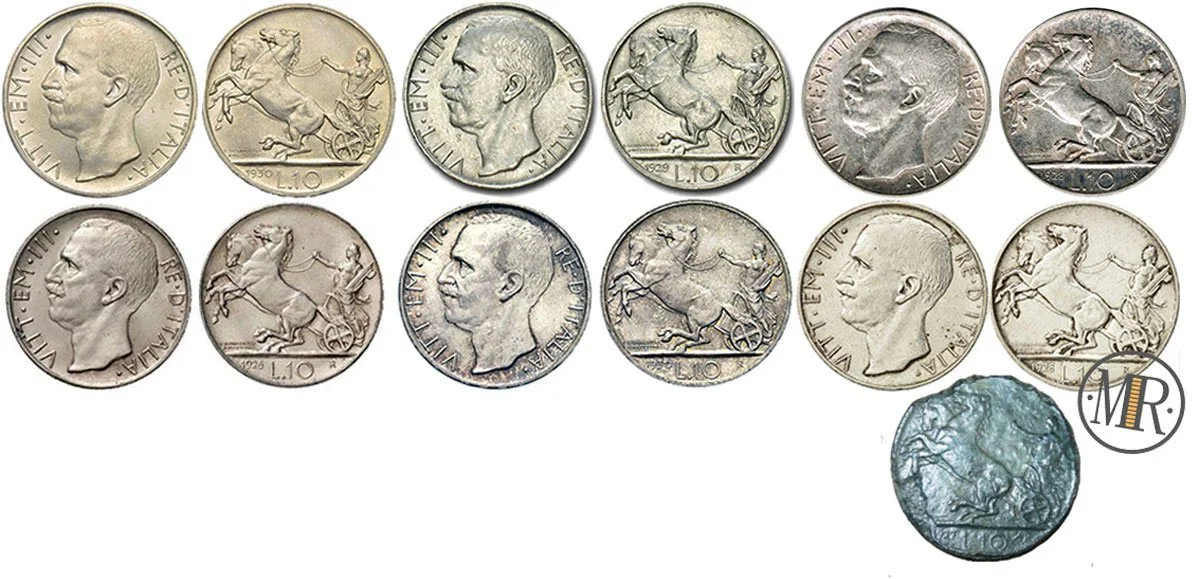
Coins are classified and valued based on their grade of preservation, the number of coins minted, and their availability on the market.
Grading a coin to assign it a correct “Grade of Preservation” is not a simple task; it requires experience, concentration, and good eyesight. Every aspect of the coin must be analyzed, every scratch and every tiny detail.
Regarding the number of coins minted, reference is made to the data provided by the State Mints year by year.
Coins are minted using the same die for the entire “mintage” and are intended for circulation or collection. Usually, those that are “circulated” have a much lower value compared to those that are “preserved” precisely because the latter show signs of wear.
Let’s then understand how to recognize their state of preservation and what characteristics they must have to be at their maximum preservation.
FDC
Fior di Conio – Coin that has never entered circulation and has been carefully preserved immediately after its minting. It may show at most very slight signs due to contact with other coins during the production process. It is the highest grade of preservation because it comes from limited editions intended for collecting. 10/10 of metal present in the reliefs.
SPL
Splendida – coin that has circulated very little, presenting all details intact and showing no signs of wear. 8 or 9/10 of metal on the reliefs of the design.
BB
Bellissima – circulated coin that, however, shows only slight signs of wear despite circulation. The relief appears “tired” but the coin remains perfectly legible. The inscriptions, hair, and other details begin to flatten slightly. Pleasant. 6 or 7/10 of metal above the reliefs.
MB
Molto bella – heavily circulated coin that shows evident signs of wear on the highest reliefs but is still quite legible. The inscriptions, hair, and other details begin to flatten due to wear. Almost pleasant. 4 or 5/10 of metal is still present on the reliefs.
B
Bella – coin with evident signs of wear and circulation, with some details barely legible and obvious defects. With smooth areas. 2 or 3/10 of metal on the reliefs of the coin.
D
Discreta – Slightly better than Modesta, the coin is almost entirely smooth with barely recognizable details and various signs of wear or defects. Just 1 or 2/10 of the original metal on the reliefs of the design.
M
Mediocre – coin with Modesta preservation, very worn and smooth, poorly defined edges and illegible legends.
Classification of Intermediate Grades:
q (-)
The letter “Q” is simply the abbreviation for “almost” and is placed before or after the grade of preservation.
- – or q: qSPL or (Spl-) indicates that the coin is almost splendid or (less than Splendida)
q (+)
Like the Q, the symbol + indicates the term “Better” and is used before the acronym of the grade of preservation to emphasize its intermediate degree of wear.
- + or m: BB+ or (mBB) indicates that the coin in question is more than Bellissima or (Better than Bellissima)
- Spl++: Much more than Splendida
FS or PROOF
Fondo Specchio, is not a state of preservation but a production technique for coins whose destination is exclusively for collection, making the backgrounds mirror-like. A technique that involves polishing the blanks before minting. Sometimes the relief parts are satin-finished.
They are the so-called Show Coins or Presentation Coins because, originally, they were minted exclusively to be presented to the King. Therefore, they had to be precious and particularly cared for to display wealth and sophistication.
The first coins minted with a Mirror Finish were the Crowns of King Charles II of England. Produced in 1662 by the Royal Mint.
International Nomenclature Table
Gold Test
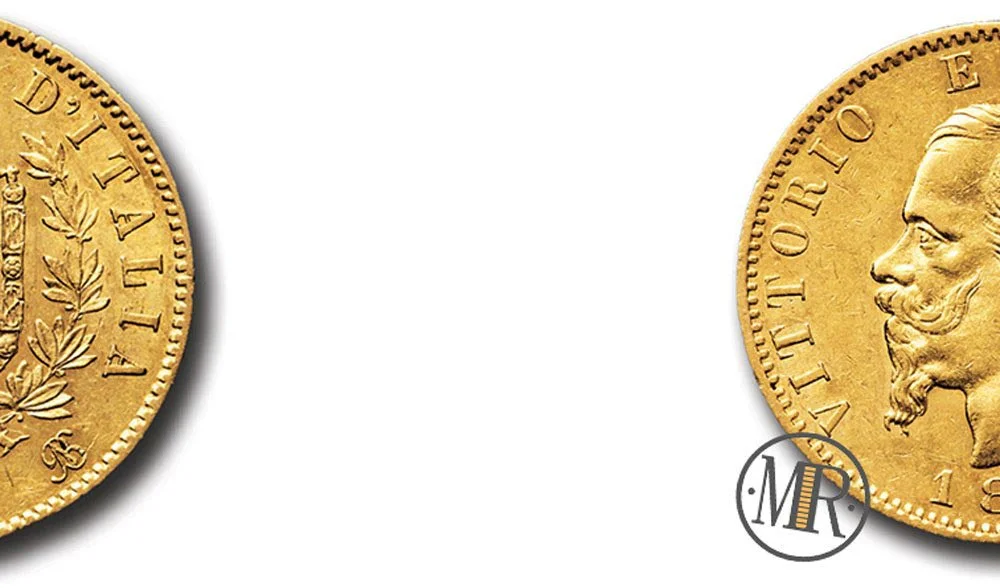
The metal of coins wears mainly through circulation due to the friction between them. The more a coin circulates, the more it will become “smooth,” gradually losing part of its original metal and thus its weight. This occurs for gold, silver, copper, and even for lower alloys.
In ancient gold coins, there was also the custom of performing the Gold Test, which involved striking the coin against a marble slab and listening to the sound that, if “golden” and silvery, would confirm the presence of precious metal within the coin itself. Obviously, this practice could only damage the metal and wear it down with the repetition of the test.
This is why the presence of “Knocks” is essential to define the originality of a coin. And this is why it is so difficult to find gold coins in BU or FDC condition even in the most prestigious auctions.
Another curiosity regarding gold coins is that the practice of the Gold Test wore down the coins to the point of rendering them unusable. Often the State imposed the withdrawal of these worn and defaced coins to replace them with equally “New from the Mint” ones.
Sometimes, specimens that were too deteriorated and had lost too much weight were rejected by both the Mint and the market, which justifies the presence of so many “Smooth” gold coins still available in the numismatic market.
Coin Rarity
In addition to the condition of the coin, it can be classified as Common or Rare based on the number of specimens issued into circulation or its availability on the market. The rarity of a coin can vary over time also based on auction sales or, especially for ancient coins, based on new details about its history.
Here are the classifications used for coins in Italy and their meanings:
- R : Rare
- R2 Very Rare
- R3 Extremely Rare
- R3 Exceptionally Rare
- R5 Few Known Specimens
- R6 Unique Specimen
- U Unique
- C Common
- CC Very Common
- NC Not Common
Rotational Axes
The rotational axis is the relationship between the vertical axes (y) of the two sides of the coin. The measurement is quantified in Degrees or in Clock.
Coins can be minted in two ways, with the rotational axes French or German.
- French Axes: Coin with axes offset by 180° from each other. Also known as Coin.
- German Axes: Coin with axes aligned with each other. Also known as Medal.
Glossary
- Numismatics: Historical, artistic, geographical, and economic study of coins / Coin collecting
- Exonumia: A branch of numismatics, the study of numismatic objects such as Tokens, Medals, or Engravings.
- Paranumismatics: A branch of numismatics that studies Tokens, Medals, and Engravings.
- Mint: The location of the Polygraphic Institute responsible for coin minting.
- To Mint: To produce a coin using a die.
- Planchet Preparation: Technique for preparing planchets for the minting of Proof coins.
- Faces: The faces are the two opposite sides of the coin.
- Common Side: The side of the Euro coin common to all countries, corresponding to the Value Side.
- National Side: The side of the Euro coin personalized by the issuing country.
- Obverse: The face of the coin with the most important design, usually where the issuing authority is indicated.
- Reverse: Also known as the Reverse or Value Side, it is the face of the coin opposite the Obverse.
- Value Side: The face of the coin with the nominal value.
- Axis of Rotation: The relationship between the axes of the two faces of the coin. Measured in degrees.
- Die: The tool used to strike the planchets for coin production.
- Re-strike: A coin struck using the original die but dated after the year of issue.
- Edge: Or Rim, the part of the coin between the Obverse and the Reverse. The thickness of the coin.
- Mintage: The number of coins minted within a year for each individual coin.
- Planchet: A smooth metal coin ready to be struck.
- Shaving: An ancient fraudulent practice of removing precious metal from coins by filing their edges.
- Palancone: A 10 Centesimi coin of King Vittorio Emanuele II issued between 1862 and 1866
- Trial: A planchet struck before minting to verify the design on the new coin. (Essay)
- Trial Design: Experimental designs for new coins minted to verify their effect and appearance.
- Face Value: The value of the coin engraved on it.
- Exergue: The lower part of the coin where the value and date are usually engraved.
- Incuse: Part of the design that is engraved, recessed compared to the surface of the coin itself.
- Relief: Part of the coin with a design in relief compared to the field of the coin.
- Soldone: 10 Centesimi coins issued between 1862 and 1866 under King Vittorio Emanuele II.
- Hybrid: A coin that features the face of two different coins.
- Cast Coin: A coin produced by pouring metal into a negative mold.
- Bimetallic Coin: A coin produced using two different metals.
- Counterfeit: A fake coin passed off as genuine.
- Reproduction: A faithful imitation of a coin made with less precious metal. Usually marked.
- Patina: A film that forms on the coin due to the oxidation of the metal.
- Fert: Motto of the Savoy / Kingdom of Sardinia / Kingdom of Italy (acronym: Fortitudo Eius Rhodum Tenuit)
- Token: Token
Minting Errors
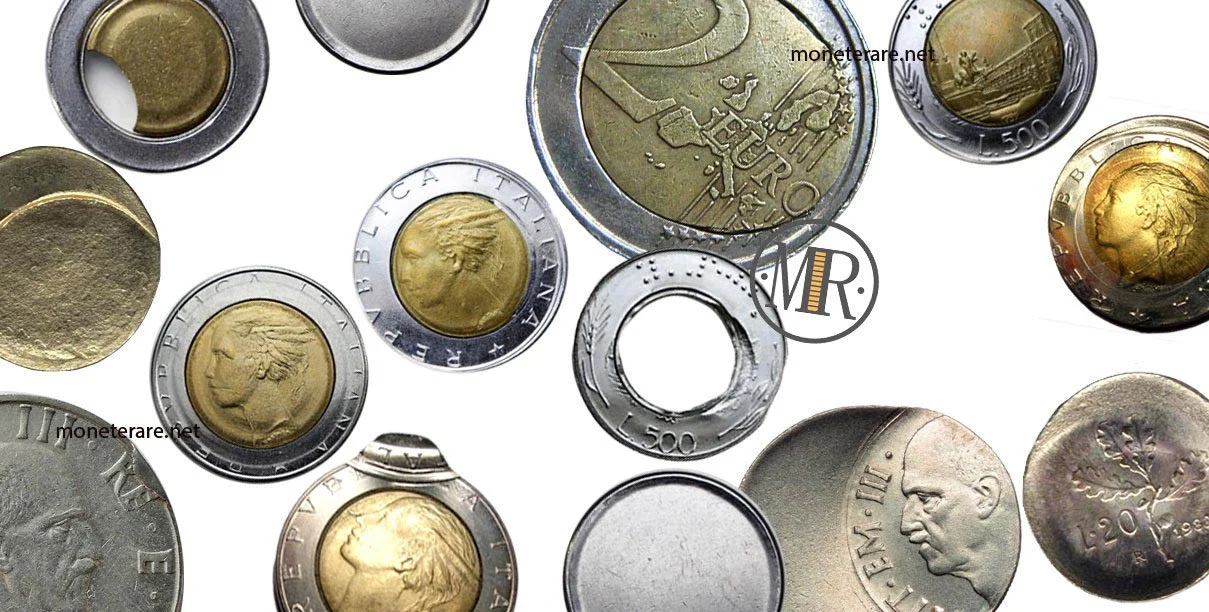
A minting error is generally an imperfection of various kinds caused by mistake from the use of a damaged die or simply dirty.
There can be numerous minting errors. Sometimes coins with minting errors are melted down or, if already issued, may be withdrawn from circulation. However, it is known that the coin with “Minting Error” is often rare and therefore highly sought after, and its market value increases significantly.
Here are some minting errors and their meanings:
- Clogged Die: Numbers or letters missing due to partial clogging of the die.
- Broken Die: With unwanted raised or recessed marks, joined letters, or missing parts.
- Off-Center Coin: Blank not centered between the two dies.
- Wrong Metal: Coin minted with metal from the previous die.
- Unstruck Blank: Coin that shows no signs of striking.
- Rotated Axes: When the two sides of the coin have the die axis misaligned by a few degrees.
- Semi-Indented Edge: With an edge partially or halfway indented.
- Same Impression: Blank struck twice for obverse and reverse on the same side, overlapping faces.
- Double Impression: Coin that is not expelled after striking and is therefore struck again. Overlapping strikes.
- Double Minting: Coin struck on another already minted coin.
- Dish-Shaped: Coin that has a dish-like curvature.
- Excess Metal: Coin that has one or more points of excess metal.
Frequently asked questions
What does FDC mean in numismatics?
FDC (Uncirculated) indicates a coin in perfect condition, without signs of circulation, as if it has just come out of the mint.
Where to sell or buy coins
Do you own coins like these, a lot, or a rare piece? Register on Catawiki and place your first bid, or submit a lot for sale — signing up is free. For years we have used this auction site, our partner. Browsing auctions is not enough: start with registration and a first action (a bid or a listing). Register and start.