
Rare Euro Cent Coins
Updated:
On this page we cover rare euro cent coins — before diving into each denomination, here is a short overview.
The year 2002 marks the introduction of euro cents in Europe. The euro is divided into one hundred cents, and the coins come in a total of eight denominations: 2 euro | 1 euro | 50 cents | 20 cents | 10 cents | 5 cents | 2 cents | 1 cent.
Looking for this guide in German? See the German edition on MoneteRare Deutschland.
Introduction to rare euro cent coins
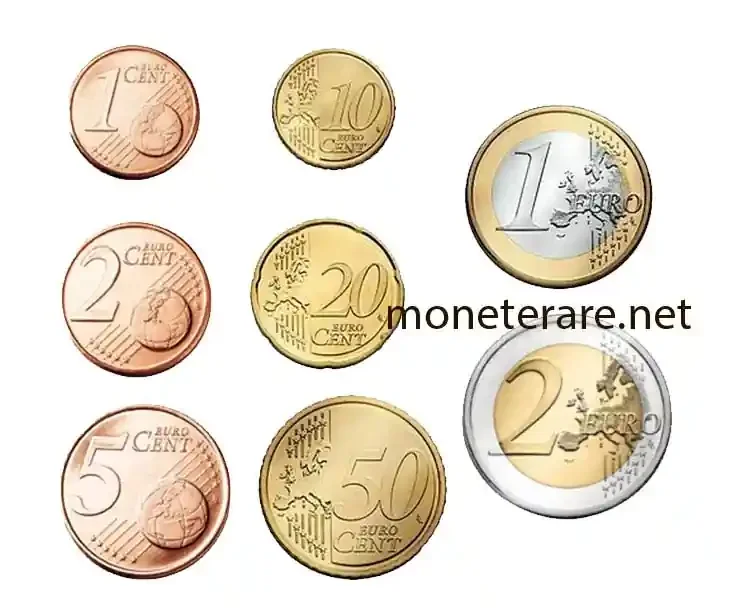
All Euro coins feature, on the reverse, a map of Europe, while on the obverse each coin has a different design depending on the eurozone. From this, it is easy to imagine that there are a large number of coins in circulation, of the same denomination, with a variety of different designs.
In addition to this peculiarity, there are several rare cents. These are mostly coins created for commemorative purposes and issued for collectors. However, there are also some specimens withdrawn from the market due to errors, making them very rare pieces, if not even untraceable.
“So rummage through your wallets.
You might have a coin worth several thousand euros and not even know it.
Then don’t say I didn’t warn you!” Quote.
Euro cent coins overview
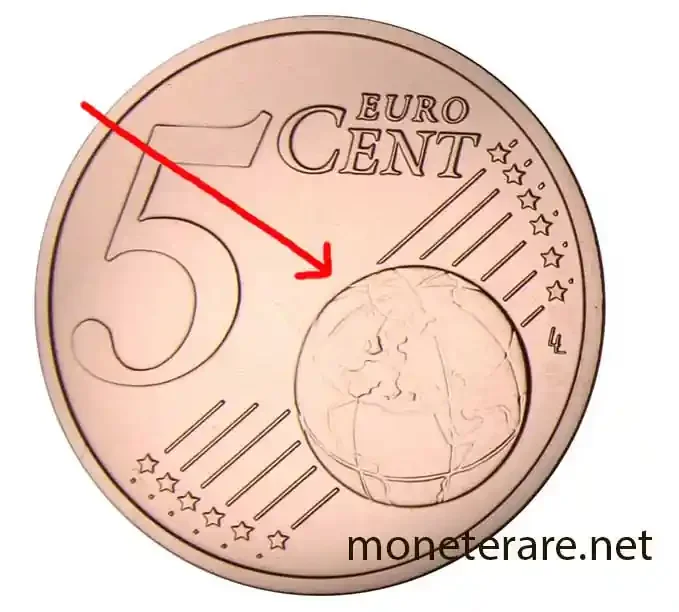
Now let's discover in more detail the euro cents and the peculiarities of these small coins. The coins of 1, 2, 5 cents show Europe in relation to Africa and Asia.
The others, previously mentioned, show the EU before its expansion (May 2004) until the minting of January 2007.
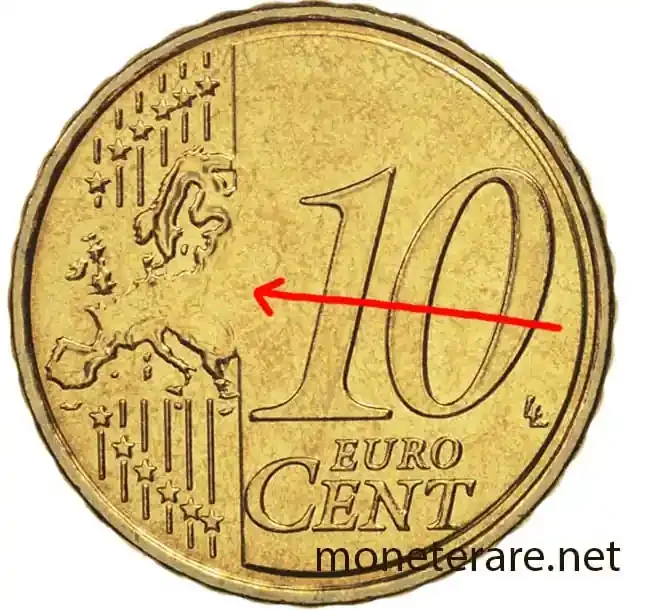
Those minted later show a map of Europe.
These are just a few curiosities regarding euro cents. If you want to delve deeper into the topic of collecting European coins, then the article on the euro collection is what you are looking for.
Rare 1 cent euro coins
Let's now learn about the characteristics of the 1 cent euro coin and try to understand why everyone is looking for the rare one.
The 1 cent is the smallest denomination coin in the euro collection. It weighs 2.30 grams, has a diameter of 16 mm, and is made of steel with a copper plating. The edges are smooth and the axes are German-style.
The 1 cent coin has been in circulation since 2002, although some specimens date back to 1999, the year the euro was minted.
The common side of all 1 cent euro coins, that is the obverse, was engraved by Luc Luycx and features a globe in the lower right. It also shows the then 15 members of the EU, the northern half of Africa, and the western half of Asia. Six thin lines cut diagonally from behind the globe, which presents 12 stars at the edge. In the upper left is the number 1 and the inscription EURO CENT. In the lower right of the globe are the initials of the engraver LL.
The reverse side of the coin is not unique but varies based on the issuing country. However, all European countries must include the twelve stars, the engraver's initials, and the year of issue on their coins.
At the Rome mint, on the obverse, the coin features Castel del Monte (Puglia), an octagonal building commissioned by Frederick II of Swabia. Surrounding it are 12 five-pointed stars representing the European Union, below the monogram of the Italian Republic (R I overlapped), between the mint mark on the left and the initials of the author Eugenio Driutti (ED overlapped). At the bottom is the year of minting. The edge is smooth and the axes are German-style.
Rare 1 cent euro coin value
The value of the 1 cent coin varies based on several factors. Did you know that there are specimens worth 1€ but also 550€?
Let's take a closer look.
- The 1 cent euro coin, minted in 2004, Greece, Luxembourg, Netherlands, in FDC condition, is worth only 1€
- 1 cent euro from the Netherlands from 1999, if in FDC, is worth about 1.20€.
- The 1 cent coin from Malta depicting the Mnajdra temple, if in FDC is worth 2€.
- 1 cent euro from 2003 from the Republic of San Marino, is worth about 10€ if in FDC condition.
- The rarest 1 cent coin is a minting error. It is a unilaterally minted coin, meaning it has an engraving only on the reverse and no year of minting. It is worth 550€ if in FDC and you can see an example in the image below.
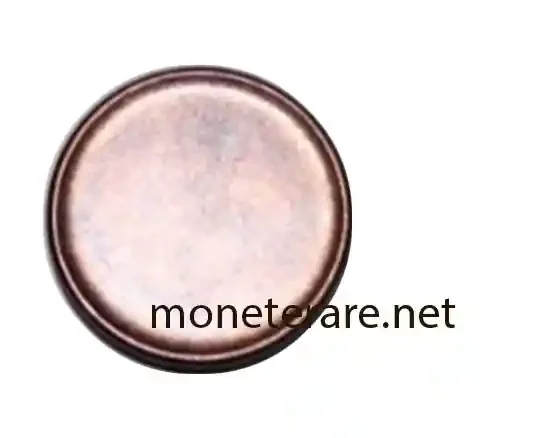
1 Wrong Cent
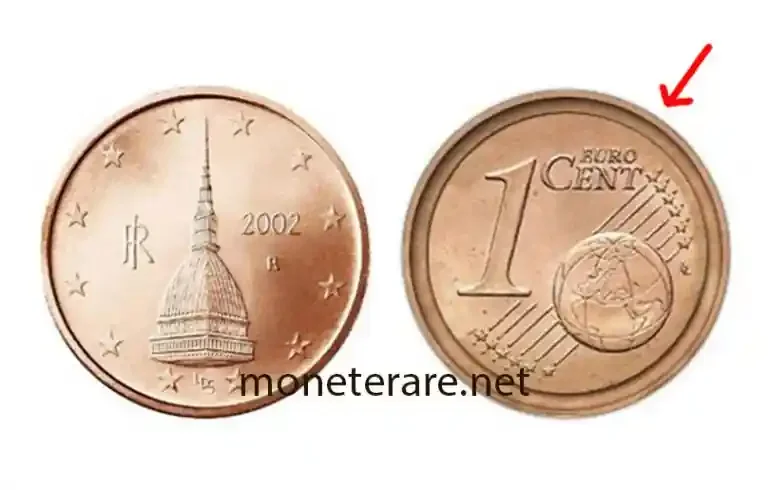
Among the euro cents, there are some specimens that could be particularly sought after by collectors. In particular, the one we will describe now is much more “famous” than the minting error we just described. It is a 1 cent that, due to a state mint error, features the Mole Antonelliana on the obverse.
Specifically, the 1 cent coin features the image of the 2 cent coin, namely the Mole Antonelliana in Turin. In reality, the correct coin should represent Castel del Monte in Puglia. The diameter is also that of the 2 cent coin, which is 18.75 mm.
These 7000 wrong coins were partially withdrawn as soon as the error was noticed.
However, it is believed that at least 100 pieces may still be in circulation that escaped requisition. Particularly interesting specimens for both numismatic enthusiasts and collectors.
Value of the wrong 1 cent euro coin
- The value of the wrong 1 cent euro coin is around 2,500€ – 3000€. Some specimens at the “Bolaffi” auction have reached a value of 6,000€. Interesting, right?
- At a Numismatic auction by Bolaffi on May 23, 2013, the most “expensive” specimen was sold for 6,600€ with a starting bid of 2,500€
Let’s remember that Bolaffi owns at least 6 coins with the error!
Rare 2 cent euro coins
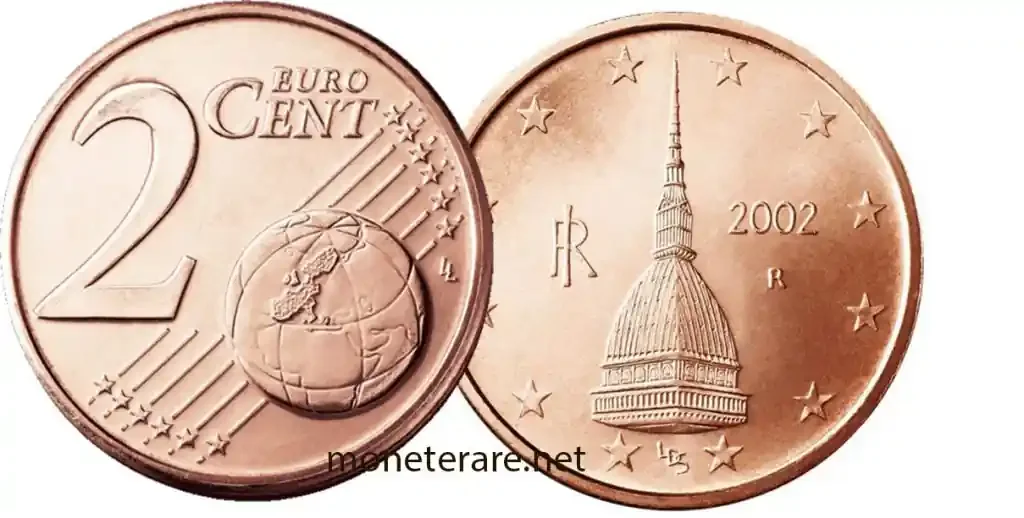
Now let's move on to the 2 cent coin. The European 2 cent euro coin is worth one-fiftieth of a euro and is made of copper-plated steel. It has a diameter of 18.75 mm, weighs 3 grams, and has a thickness of 1.67 mm. The axes are German-style, and the edge features a horizontal incuse line.
All coins have a common design on the reverse, while the obverse is country-specific. The common side of all coins was engraved by Luc Luycx and shows a globe in the lower right corner.
It also depicts the then 15 members of the EU, the northern half of Africa, and the western half of Asia. Six thin lines cut diagonally from behind the globe, which features 12 stars at the end.
At the top left of the 2 cent euro coin, there is the number 2 and the inscription EURO CENT. At the bottom right of the globe, the initials of the engraver LL.
At the Rome mint, the 2 cent coin features the Mole Antonelliana on the obverse.
However, the design of the Mole Antonelliana was mistakenly struck on some 1 cent coins, causing a minting error that has skyrocketed the value of these coins for numismatic collectors. We discussed this in the previous chapter.
Surrounding the coin are 12 five-pointed stars representing the European Union, to the left the monogram of the Italian Republic (RI overlapped), to the right the mint mark, and the monogram of the author Luciana De Simoni (LDS). The description of the coins concludes with the German-style axes and the edge featuring horizontal incuse lines.
Rare 2 cent euro coins worth €2,500
As we mentioned earlier, this is a 2 cent coin with the illustration of the 1 cent coin printed on it. This coin is referred to as the “1 cent Mole Antonelliana” or “1 cent mistake,” because it has the design that should belong to the 1 cent coin.
However, if you look at the coin from the perspective of its diameter, it is indeed a 2 cent coin, so it can be correctly referred to as “rare 2 cents” or “mistaken 2 cents.”
How to recognize it? The diameter. If you find a 1 cent coin with a larger diameter than normal 1 cent coins, then that means it is a minting error. There are various chances that it is indeed the rare 2 cents that everyone would like to find.
Value of rare 2 cent euro coins
The 2 cent coin in BU condition has a value ranging from 20 cents to 50 cents euro. There are also specimens that are worth much more. Here are some examples:
- The value of the rare 2 cents from Malta 2008 depicting the Mnajdra Temple is €1 (BU)
- The value of the 2 cents R from Vatican City minted in 67,000 pieces in 2002 in BU condition is a remarkable €110. (€55 if VF)
- Don't forget the 2 cents worth €2,500 which, as already mentioned, makes this denomination particularly interesting.
Rare 5 cent euro coins
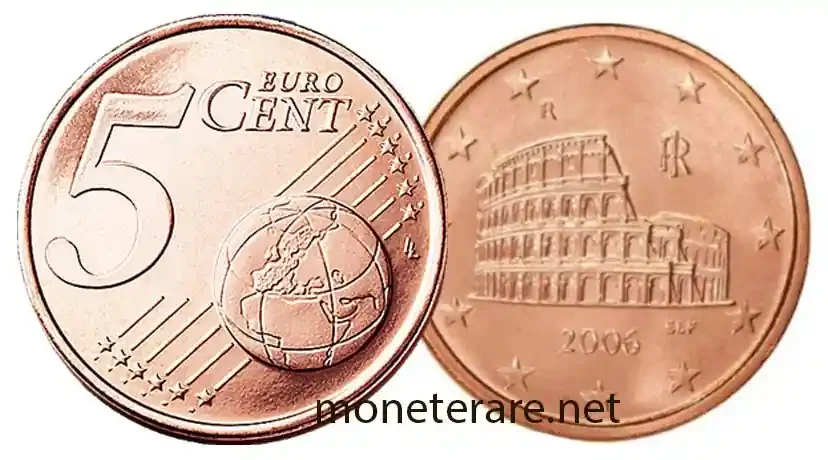
The 5 cent euro coin has a value of one twentieth of a euro and is made of steel coated with copper. It has a diameter of 21.25 mm, weighs 3.92 grams, and has a thickness of 1.67 mm. The axes are also German-style, and the edge features a horizontal incuse line.
Like the 1 and 2 cent coins, the 5 cent coins also have a common side, with the obverse design varying depending on the eurozone country. On the obverse, designed by Luc Luycx, the value of the coin is shown on the left, while on the right there is a design depicting the Earth crossed by 6 lines connecting 12 stars. The design of the Earth symbolizes Europe in relation to the world, while the 12 stars refer to the European flag.
On the reverse of the coin, the Colosseum or Flavian Amphitheater is engraved at the Rome mint. Surrounding it are 12 five-pointed stars representing the European Union, in the upper right is the monogram of the Italian Republic (RI overlapped), slightly to the upper left is the mint mark, and at the bottom is the year of minting.
Below the base of the Colosseum on the right are the initials of the author Ettore Lorenzo Flappicini (ELF). The 5 cent coins of the eurozone have a different design, but all feature the 12 stars, the initials of the engraver, and the year of issue.
Value of rare 5 cent euro coins
The less common 5 cent euro coins have a value ranging from €1 to €15. However, some other specimens are considered 5 cent coins valued at around €40.
- 5 cents from the countries of Ireland, Portugal, Greece, and Spain, minted in 2002, are worth €1 (BU)
- The 5 cents from Malta 2008 featuring the Mnajdra temple are worth €1 (BU)
- 5 cents from the Republic of San Marino, minted in 2003, are worth €10 (BU)
- The rare cents minted by the Rome mint, minted in 2003, are worth €15 (if VF)
- The rare 5 cent coins from the Vatican mint, minted in 2002, are worth €40 (BU)
Rare 10 cent euro coins
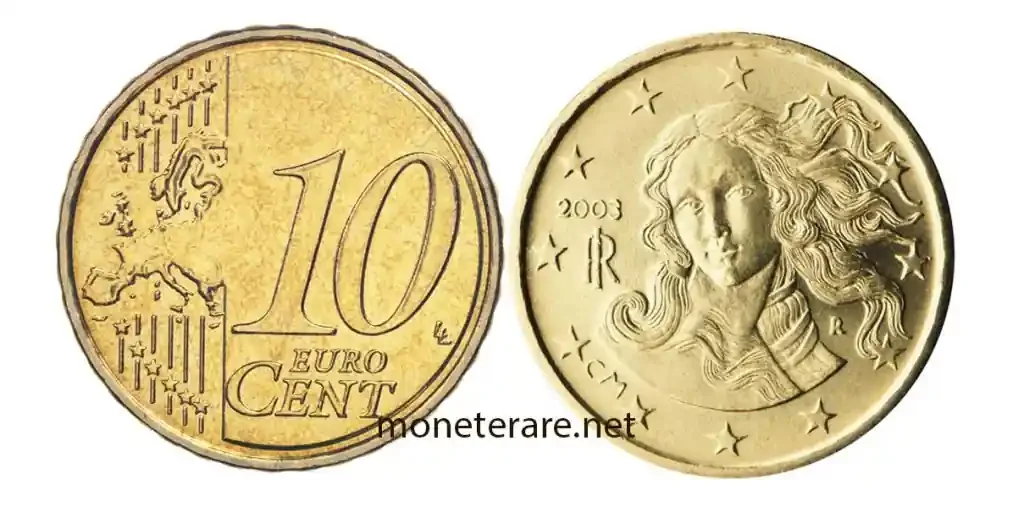
The 10 euro cent coin has a value of one-tenth of a euro and is made of a Nordic gold alloy. It has a diameter of 19.75 mm, weighs 4.10 grams, and has a thickness of 1.93 mm. All coins have a common face on the reverse and a specific design for each nation on the obverse.
On the reverse, designed by Luc Luycx, the value of the coin is present on the right while on the left there is a design depicting the map of Europe crossed by 6 lines connecting 12 stars.
The design evokes the unity of Europe while the 12 stars refer to the European flag. The edge is reeded with thick milling and the axes are German-style.
On the obverse, at the Rome mint, the coin features the “Birth of Venus” by Sandro Botticelli. Surrounding it are 12 five-pointed stars representing the European Union, at the top right is the year and the monogram of the Italian Republic (RI overlapped), to the right of Venus's neck is the mint mark (R). Between two stars, at 7:30, are the initials of the designer Claudia Momoni (CM).
Value of rare 10 cent euro coins
In the absence of minting errors or particularities of the specific 10 Euro Cent coins, the coin has a face value of 10 cents. However, there are certain conditions that can increase its value. One example is the 10 euro cents from Malta from 2008 which in FDC quality are worth €1.
It is not an interesting coin for collectors or “treasure hunters.” Or is it?
2002 10 Cents Value
The 10 cent coin with the year of minting 2002 has a rather interesting value for numismatics collectors.
- These are generally pieces with manufacturing errors. Values range from €236 for a coin that has an error on the year of minting (2002) as the date must be read by rotating the coin 180°, to €288 for a coin minted in 2002, Germany.
Rare 20 cent euro coins
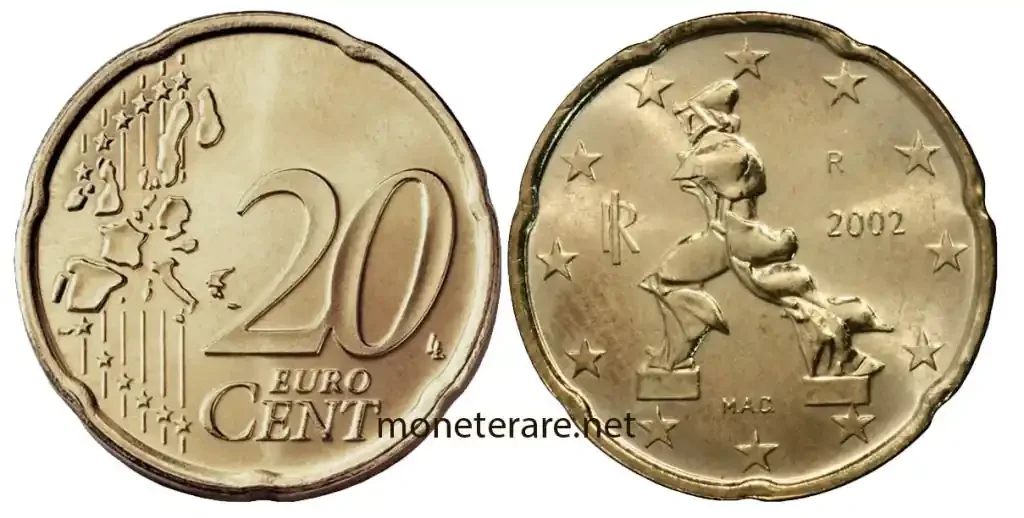
The 20 euro cent coin has a value of one fifth of a euro. It has a diameter of 22.25mm, is 2.14 mm thick, and weighs 5.74 grams. The edge is smooth with seven indentations (Spanish flower) and is made of a metal alloy known as Nordic gold. As with all the other coins already described, the reverse has a common face and another that depends on the country of the eurozone.
In the case of the Rome mint, it features on the obverse “Unique Forms of Continuity in Space”, a work from 1913 by the futurist sculptor Boccioni. Surrounding it are 12 five-pointed stars representing the European Union, to the left is the monogram of the Italian Republic (RI overlapped), to the right is the mint mark and the monogram of the author Maria Angela Cassol (M.A.C.)
The coin dates back to 2002, when euro coins and banknotes were introduced in the eurozone, with 12 member states.
Value of rare 20 cent euro coins
Let's search for the value of the 20 cents.
- In normal conditions, circulating 20 cent coins have a face value of Twenty euro cents.
- If they have particular features, such as minting errors or excess metal, they can be worth from €3.25 to €55 in BU.
Value of 20 cent euro coins 1999
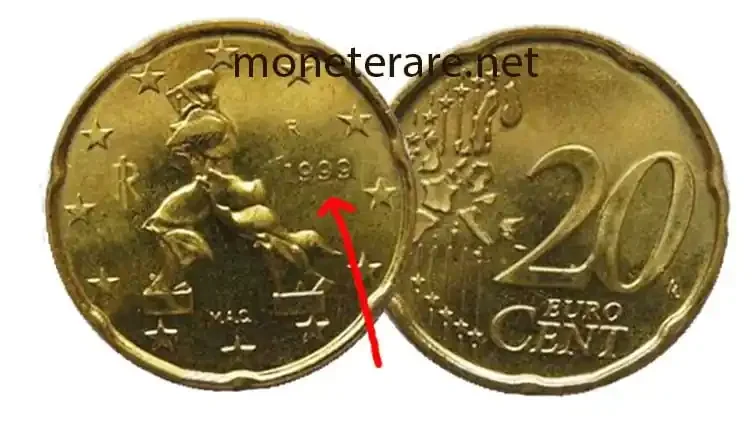
Another story for the notorious minting error of the 20 cent coin with the mint year 1999 issued in 2002:
The 1,179,335 coins, minted by mistake, were all withdrawn and destroyed (…almost all).
The specimens stolen from the Mint before the withdrawal have no economic value as they are not marketable, or at least that is what the Guardia di Finanza states. Furthermore, those found in possession can be accused of receiving stolen goods, in addition to immediate seizure.
With these premises, you can understand that these coins are nothing short of “interesting” for enthusiasts and numismatists, and their “illegal trade” is more than likely. Obviously, we do NOT know their (illegal) value.
Rare 50 cent euro coins
We have discussed the rare 50 cents extensively in another article that you can find on this page.
Frequently asked questions
What are rare euro cent coins?
Rare cents include minting errors such as the famous 1 cent with the Mole Antonelliana, some limited mintage issues from San Marino, Vatican, and Malta, and the 20 cent coins from 1999 withdrawn from circulation. You can find details and values on this page.
What is the value of the rare 1 cent with the Mole Antonelliana?
The so-called 'wrong 1 cent' (or '2 rare cents') with the Mole Antonelliana is worth between €2,500 and €3,000 for specimens in good condition, with peaks reaching €6,600 at the Bolaffi auction in 2013.
How do I recognise rare euro cents?
The main indicators are: unusual diameter (e.g., a 1 cent coin with a diameter of 2 cents = error), non-standard minting year, origin from mints with low mintage (San Marino, Vatican, Malta), and unilaterally minted coins. Compare the characteristics with those described on this page.
Do normal euro cents have any value?
Common circulating cents have face value. Those in FDC (Brilliant Uncirculated) quality from certain years and countries can be worth from €1 to several tens of euros. Only specific minting errors or special mintages reach significant valuations.
Where to sell or buy coins
Do you own coins like these, a lot, or a rare piece? Register on Catawiki and place your first bid, or submit a lot for sale — signing up is free. For years we have used this auction site, our partner. Browsing auctions is not enough: start with registration and a first action (a bid or a listing). Register and start.